
How CHADD is Connecting Its Technology Ecosystem with Data Sangria

A connected technology ecosystem does not happen just because an organization has selected the right platforms.
It happens when those platforms can share the right information at the right time.
That is the focus of CHADD’s current integration work.
Children and Adults with Attention-Deficit/Hyperactivity Disorder (CHADD) is using re:Members as its association management system, alongside other platforms that support learning, events, giving, website access, and community engagement. AMS Geek is helping connect that broader ecosystem, while Data Sangria will power several of the data integrations that keep information moving between systems.
The result is not one single integration.
It is a series of connected workflows designed around how CHADD’s members and staff actually interact with its technology.
Connecting re:Members and Thinkific
One of the most substantial pieces of the project connects re:Members and Thinkific.
Registration data will move from re:Members to Thinkific so learners can be associated with the correct courses. Data Sangria will also handle scenarios where registration information is not otherwise passed through the single sign-on process.
The connection also works in the opposite direction.
When someone completes or attends a course in Thinkific, Data Sangria will send that information back to re:Members, matching the learner to the correct person and the course to the corresponding event or course record.
That creates a more complete learning data flow:
Registration in re:Members → Learning in Thinkific → Completion data back to re:Members
Instead of course activity remaining isolated inside the learning platform, relevant information can become part of the broader member record.
Bringing Donation Data Into re:Members
CHADD’s future donation platform will also connect with re:Members through Data Sangria.
The integration will synchronize selected donation information from the donation platform into a custom data table in re:Members and associate each donation with the correct person.
The data can include donation amount, transaction date where supported, and a unique transaction identifier used to help prevent duplicate records.
Importantly, the purpose of this integration is informational.
The donation record will not create accounts receivable activity inside re:Members or alter balances. Instead, it gives CHADD another way to connect giving activity back to the individual record.
That distinction matters.
A good integration does not need to force one platform to recreate the functionality of another. It simply needs to move the information that is valuable to the broader ecosystem.
Connecting Event Participation Through Swoogo
Events create another important source of member activity.
As part of the CHADD project, Data Sangria will synchronize attendance and, where applicable, continuing education information from Swoogo back to re:Members.
The integration will associate Swoogo records with the correct individual and create or update the applicable event registration within the AMS.
That means participation in an event does not have to remain only inside the event platform.
Once attendance or CEU data is captured in Swoogo, it can become part of the participant’s broader history in re:Members.
For associations trying to understand engagement across multiple channels, that kind of connection can be incredibly valuable.
Using re:Members Data to Power the Online Community
CHADD is also planning a connection between re:Members and a future online community platform.
This integration goes beyond simply copying profile information.
Data Sangria will be able to provision and update community users, grant or remove access, and manage group or community membership based on approved business rules and data maintained in re:Members.
For example, committee membership in re:Members could be used to determine whether someone should be added to or removed from a corresponding group in the community.
This is a good example of how integration can move beyond synchronization.
The data in one system can actively drive what happens in another.
Different Integrations for Different Needs
What stands out about CHADD’s project is that each integration solves a different problem.
The Thinkific connection is about keeping registration and learning completion data aligned.
The donation integration brings giving information into the broader constituent record.
The Swoogo integration connects event participation back to re:Members.
The future community integration uses AMS data to help manage access and participation.
All of those connections involve data movement, but they are not identical workflows.
That is why integration strategy matters.
The goal is not simply to connect every platform to every other platform.
It is to understand:
What information needs to move?
Which system should be the source?
Where should that information go?
What should happen once it gets there?
And how frequently does it actually need to update?
For CHADD, the planned integrations will run on hourly or daily schedules depending on the connection and final production requirements.
Where Data Sangria Fits
Data Sangria is the integration layer behind these data flows.
AMS Geek will review the integration requirements and field mappings, build the necessary functionality, test the connections, configure them within Data Sangria, and demonstrate the completed integrations to CHADD.
Data Sangria’s role is then to keep approved information moving between the systems once those connections are in place.
It is not a bulk data-conversion tool. The platform is designed to keep implemented systems up to date by responding to changes in source data and synchronizing that information according to the requirements of each integration.
For CHADD, that means building a connected ecosystem around re:Members without asking every platform to do the same job.
Creating a More Complete View of Engagement
A person’s relationship with an association rarely lives in one system.
They might register for a course in the AMS, complete it in the LMS, attend an event through an event platform, make a donation somewhere else, and participate in an online community.
Those interactions happen across different technologies.
But the information they generate can still be connected.
That is the bigger opportunity behind CHADD’s integration project.
By connecting learning, events, giving, and community activity back to re:Members, CHADD can build a technology ecosystem where important information is less likely to remain trapped in separate platforms.
And that is exactly what Data Sangria is designed to support.
Different systems. Different data. Better connections between them.
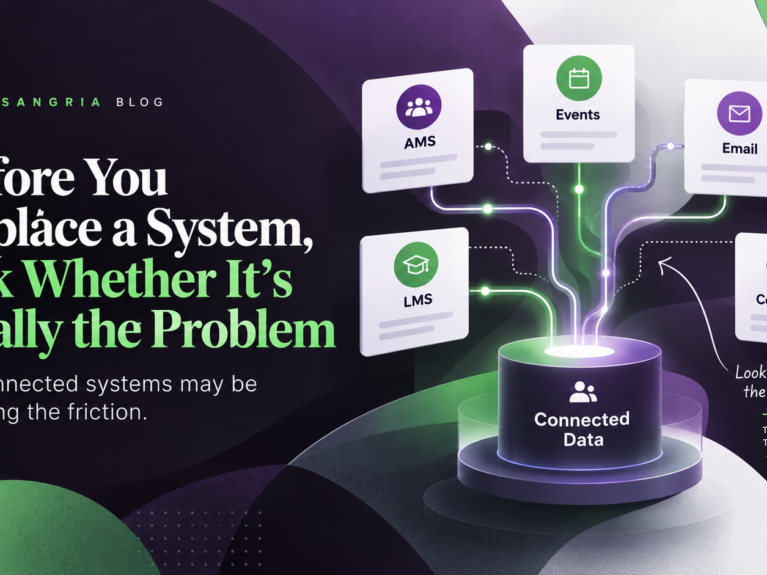
As associations plan for 2027, it’s tempting to assume that technology frustrations require new platforms. But what if the real problem isn’t the software itself? Explore how disconnected systems, manual processes, and inconsistent data can influence technology decisions.
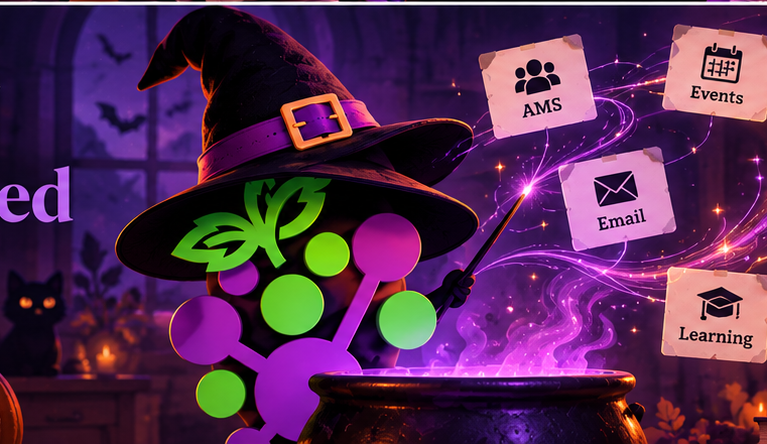
Your AMS, event platform, email system, and other tools may all hold useful member data — but if they are not connected, staff are left piecing the story together manually. Here are the signs your systems may need better integrations.
NCPG is using Data Sangria to connect Cvent and YourMembership, bringing event registration and profile data back into the AMS while helping prevent duplicate records.