
Before You Replace a System, Ask Whether It’s Really the Problem

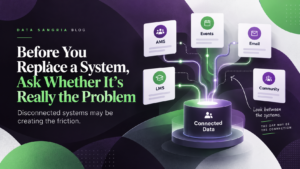
It’s that time of year again.
Association teams are reviewing budgets, evaluating priorities, and thinking about what needs to change before 2027.
And somewhere in those conversations, someone is probably saying, “We need a better system.”
Maybe the AMS isn’t giving staff the information they need. Maybe event registrations require too much manual work. Maybe the marketing team can’t build the audience segments it wants because important member information lives somewhere else.
These frustrations are real, and sometimes replacing a platform is the right decision.
But before starting another software search, there’s a question worth asking:
Is the system actually the problem, or is it the way your systems are working together?
When Good Technology Creates a Frustrating Experience
Most associations don’t operate with just one technology platform.
They rely on an association management system (AMS) to manage membership, an event platform for registrations, a learning management system for education, and marketing tools for communications. Some also use separate platforms for advocacy, community engagement, fundraising, and financial operations.
Each platform serves a purpose.
And individually, many of them do their jobs well.
The challenge appears when information needs to move from one system to another.
Consider an association whose event platform handles registration perfectly. Members can register, receive confirmations, and attend events without any issues.
But after the event, staff export attendance records, clean up spreadsheets, and manually update the AMS.
The event platform isn’t necessarily failing. Neither is the AMS.
The problem is what happens between them.
And yet, those disconnected processes can lead to the conclusion that the organization needs a different system.
Without understanding where the frustration originates, an association could replace a perfectly capable platform and still find itself dealing with the same operational challenges.
Your Technology Stack Is Only as Connected as the Data Behind It
As associations prepare for 2027, technology planning shouldn’t focus exclusively on what each platform can do.
It should also consider how information moves across the organization.
A member’s relationship with an association doesn’t begin and end inside the AMS.
That person might attend a conference, complete an educational course, participate in advocacy efforts, and engage with marketing communications throughout the year.
Each interaction tells the association something valuable.
But what happens to that information?
Does conference attendance make its way into the member record?
Can the marketing team identify members who completed a particular course?
Does participation in an advocacy campaign contribute to a more complete understanding of member engagement?
Or does each department have its own version of the member’s activity?
When systems operate independently, associations can end up collecting valuable information without being able to use it effectively.
And that creates a problem that a new platform alone may not solve.
Three Signs Your Association May Have a Connection Problem
Before deciding that a system has reached the end of its usefulness, take a closer look at how your technology operates across departments.
There are a few common signs that integration gaps may be contributing to the frustration.
1. Staff are moving the same information more than once
If someone regularly exports data from one platform and imports it into another, there’s an opportunity to investigate.
Manual data transfers take time, introduce opportunities for mistakes, and create unnecessary dependencies on staff.
More importantly, they often indicate that two platforms are capable of doing their individual jobs but aren’t sharing the information needed to complete a process.
For example, event registrations may be managed in one platform while membership records are maintained in another.
Rather than changing how either platform operates, connecting them may allow relevant information to move automatically.
2. Different systems tell different stories
Does your AMS show one email address while your marketing platform shows another?
Are engagement reports missing activities that happened outside the membership database?
Does staff have to compare information across multiple systems to understand a member’s complete history?
These inconsistencies can make reporting more difficult and reduce confidence in organizational data.
They also create confusion about which platform should be considered the source of truth.
A well-designed integration strategy establishes clear rules about where information originates, which system owns it, and how updates should move between platforms.
The result is a more consistent foundation for reporting, communication, and decision-making.
3. Members experience unnecessary disconnects
Members don’t think about an association’s technology stack.
They don’t necessarily know which platform manages their membership, which one handles educational programs, or where event registrations are stored.
They simply expect the organization to recognize them.
When systems aren’t connected, members may encounter situations where they need to enter the same information repeatedly, manage separate accounts, or contact staff to resolve something that should be straightforward.
These experiences may seem like small inconveniences individually.
Together, they can affect how members perceive the organization.
Better connections between platforms can help associations create a more consistent experience without necessarily replacing the tools members and staff already use.
Before You Replace Anything, Ask These Three Questions
Technology replacement is a significant decision.
It can involve new contracts, implementation timelines, data migration, staff training, and changes to established processes.
Before making that investment, association leaders should understand whether the challenges they’re facing actually require a different platform.
Start with three questions.
1. What specifically isn’t working?
Get beyond general frustration.
Is the platform missing an essential feature? Is staff spending too much time on manual processes? Is information unavailable when it’s needed?
The more specific the problem, the easier it becomes to identify the right solution.
2. Is the problem happening inside the system or between systems?
A missing feature and a missing integration are two very different problems.
If a platform cannot support an essential organizational requirement, replacement may be necessary.
But if the challenge involves moving information, synchronizing records, or connecting activities across departments, integration may be a more practical place to start.
3. Would a new system actually eliminate the problem?
Imagine completing a major implementation tomorrow.
Would staff still need to transfer information between platforms?
Would reporting still depend on disconnected data?
Would members still experience gaps between different parts of the organization?
If the answer is yes, replacing the platform may not address the underlying issue.
Make Better Connections Part of Your 2027 Strategy
A thoughtful technology strategy isn’t necessarily about reducing the number of platforms an association uses.
It’s about making sure those platforms serve the organization effectively.
Different departments often need specialized tools, and there’s nothing inherently wrong with that.
The problem occurs when those tools operate in isolation.
As associations plan for 2027, it’s worth evaluating not only the capabilities of individual platforms, but also the connections between them.
Where is information getting stuck?
Which processes depend on manual transfers?
Where could more consistent data improve staff efficiency, member engagement, or organizational reporting?
Answering those questions can reveal opportunities that might otherwise be overlooked during a traditional technology review.
And in some cases, the most meaningful improvement won’t require replacing anything at all.
Better Technology Doesn’t Always Mean New Technology
It’s easy to assume that progress requires something new.
A new AMS. A new marketing platform. A new event management system.
But sometimes, the most valuable improvement comes from making existing investments work better together.
At Data Sangria, that’s the thinking behind how we approach integration.
We help associations connect the platforms they already rely on, automate the movement of information, and create more consistent data across their technology environments.
Because the goal shouldn’t be to collect more systems.
It should be to get more value from the ones you have.
Before you add another platform to your 2027 roadmap, take a closer look at what’s happening between your existing systems.
You may find that the next opportunity isn’t a replacement.
It’s a connection.
Let’s Connect Your Technology
Wondering whether your organization’s challenges require a new platform or better integration between the systems you already use?
Explore Data Sangria and see how connected technology can help your association make more of its existing investments.
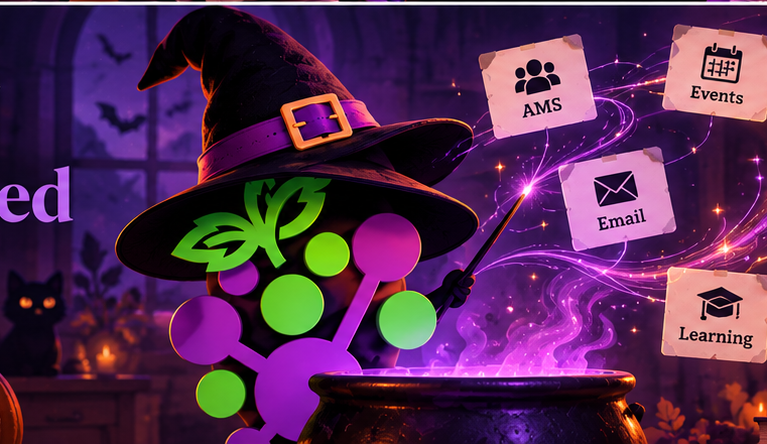
Your AMS, event platform, email system, and other tools may all hold useful member data — but if they are not connected, staff are left piecing the story together manually. Here are the signs your systems may need better integrations.
NCPG is using Data Sangria to connect Cvent and YourMembership, bringing event registration and profile data back into the AMS while helping prevent duplicate records.
Data Sangria is helping the American Association of Veterinary Medical Colleges (AAVMC) connect its existing technology through integrations between re:Members, Cvent, and Constant Contact. By automating the flow of membership, event attendance, CEU, and email engagement data, these integrations will reduce manual work, improve data consistency, and help AAVMC get more value from the platforms it already uses.