
System Sprawl Is Really a Data Problem

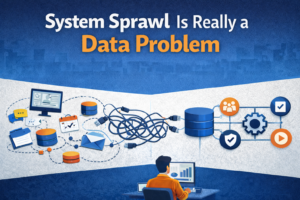
When organizations talk about system sprawl, the focus is usually on the number of tools they use.
A CRM.
An event platform.
A learning system.
Marketing automation.
Each platform solves an important problem. But as more tools are added, something else starts to happen.
Data begins to spread across the technology stack.
And that’s where the real challenge begins.
When Data Lives Everywhere
Every platform collects valuable information.
A CRM tracks contacts and engagement.
Event systems capture registrations and attendance.
Learning platforms record course activity.
Marketing tools track opens, clicks, and campaigns.
Individually, these systems work well.
But when the data stays inside each platform, organizations lose the ability to see the full picture.
Instead of one clear dataset, they end up with fragments scattered across multiple systems.
The Reporting Challenge
System sprawl usually becomes obvious when teams try to answer basic questions.
Questions like:
-
Which events drive long-term engagement?
-
What marketing efforts lead to participation?
-
How active are members across programs?
When data lives in several platforms, answering these questions often requires manual work.
Teams export spreadsheets, combine reports, and piece together insights from multiple sources.
It works, but it’s slow and rarely tells the full story.
A Better Way to Think About It
System sprawl isn’t just a technology problem.
It’s a data organization problem.
Instead of relying on every system to communicate perfectly, many organizations are shifting toward centralizing their data so information from across platforms can be analyzed together.
The systems still serve their purpose.
But the data finally works as one ecosystem.
Technology stacks will always grow as organizations evolve.
The key isn’t reducing systems — it’s making sure the data they generate can actually be used.
When that happens, system sprawl becomes far less of a barrier and far more of an opportunity for insight.
As associations expand their technology ecosystems, seamless integrations become critical for operational efficiency. Learn how Data Sangria helped connect MemberSuite and EventsAir for OASBO to automate event and registration data synchronization while supporting a more connected association technology stack.
Struggling to keep YourMembership and Salesforce in sync? Learn how Data Sangria connects your systems, automates data flow, and gives your team a single, reliable source of truth.
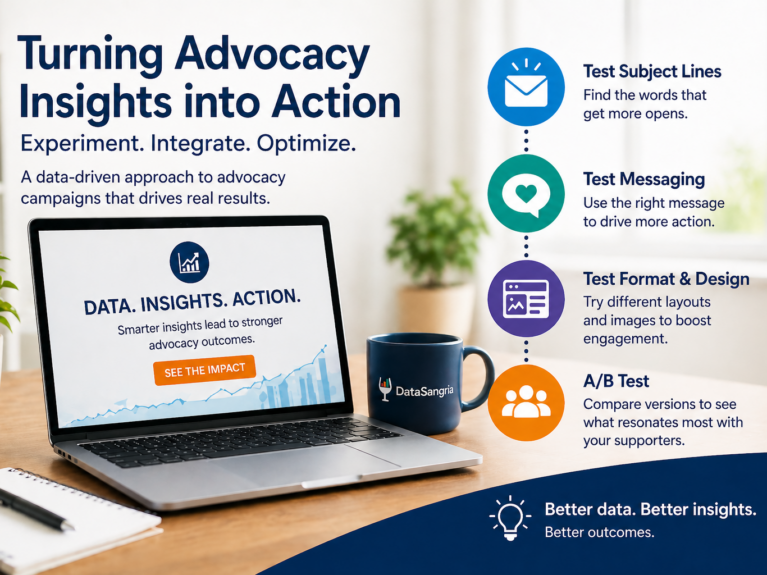
Advocacy success depends on action, not just opens. Learn how experimentation, A/B testing, and integrated data help optimize campaign and turn insights into measurable data.